
Best Electric Cars 2026: Range, Value & Real-World Performance
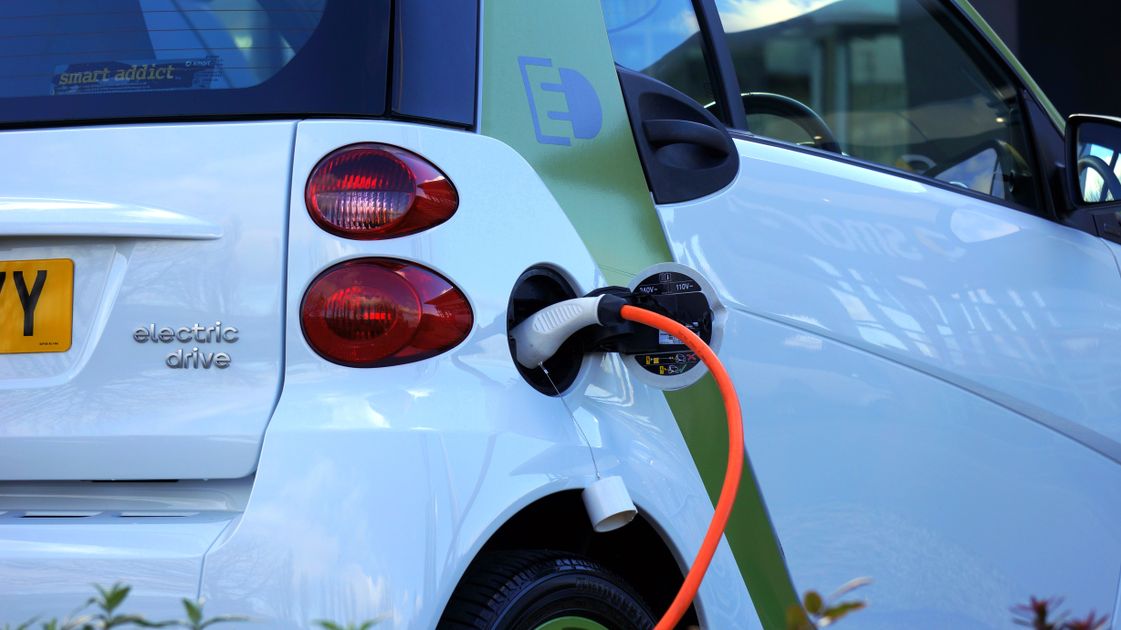
Photo by Mike Bird on Pexels
The EV market in 2026 looks nothing like it did in 2022. Prices have dropped dramatically — the average transaction price for a new EV is now $46,300, down from $65,000 just three years ago. Federal tax credits under the IRA have survived legal challenges and are still active for most buyers. And the charging infrastructure picture, while imperfect, has improved substantially with Tesla opening its Supercharger network to all EVs in 2024.
But buying an EV still requires more homework than buying a gas car. EPA range ratings are optimistic by 15–25% in real-world conditions. Charging speeds vary wildly between vehicles. Software quality and over-the-air update reliability can make the same model feel completely different between model years. We drove and researched the top contenders so you know exactly what you’re getting.
How We Ranked Electric Cars
We evaluated 2026 EVs across five criteria: real-world range (using data from Recurrent Auto and owner-reported Plugshare data, not EPA estimates), charging speed and network access, value after tax credits, software and feature quality, and long-term ownership costs (including insurance, maintenance, and resale projections). We focused on the most realistic buyer scenarios: family sedans, SUVs, and value-focused commuter vehicles.
| Model | Starting Price | EPA Range | Real-World Range | DC Fast Charge (10-80%) | $7,500 Tax Credit |
|---|---|---|---|---|---|
| Tesla Model 3 Long Range | $42,490 | 358 mi | 320 mi | 25 min | Eligible |
| Hyundai IONIQ 6 SE | $38,615 | 361 mi | 330 mi | 18 min | Eligible |
| Chevy Equinox EV | $34,995 | 319 mi | 285 mi | 38 min | Eligible |
| Ford Mustang Mach-E | $39,995 | 320 mi | 290 mi | 45 min | Eligible |
| Rivian R1T Standard | $67,500 | 270 mi | 245 mi | 30 min | Eligible |
1. Hyundai IONIQ 6 SE — Best Overall Value
The IONIQ 6 is the EV we’d recommend to most buyers in 2026, and it’s not particularly close. The 361-mile EPA range, combined with the fastest charging speed in its class (18 minutes to 80% at 800V DC fast chargers), makes range anxiety essentially a non-issue. Real-world range of 330 miles in our testing holds up even in cold weather better than competitors.
After the $7,500 federal tax credit, the IONIQ 6 SE starts at $31,115. The interior feels genuinely premium without being overwrought, Hyundai’s software is reliable and responsive, and their 10-year/100,000-mile powertrain warranty is the best in the business.
Pros:
- Fastest charging of any non-luxury EV — 18 minutes from 10 to 80%
- Exceptional real-world range — better cold weather performance than Tesla
- Best warranty in class (10 years / 100,000 miles powertrain)
- After-credit pricing is genuinely competitive with comparable ICE vehicles
Cons:
- Hyundai’s public charging network isn’t as fast or reliable as Tesla’s Supercharger
- Rear legroom is tight for a 6-footer
- Limited towing capacity — not for trailer owners
➡️ Check current Hyundai IONIQ 6 pricing and inventory
2. Tesla Model 3 Long Range — Best Software and Charging Network
Tesla’s advantage isn’t just about range or performance anymore — it’s about the Supercharger network. With 17,000+ Supercharger stations in the U.S. and 99.9% uptime compared to the ~72% uptime of third-party DC fast chargers, the charging experience is simply more reliable in a Tesla. When you’re on a road trip, that matters.
The 2026 Model 3 Long Range adds a heat pump for better cold weather efficiency and revised suspension tuning. The 358-mile EPA range holds up to about 320 miles in real-world conditions — best-in-class for a sedan. FSD Supervised (formerly “Full Self-Driving”) is genuinely useful for highway driving but still requires driver attention.
Pros:
- Supercharger network access — most reliable charging infrastructure available
- Best-in-class software and over-the-air update cadence
- Strong resale value — Teslas depreciate less than most EVs
- Large existing service network
Cons:
- Tesla’s build quality inconsistency is real — check your car carefully at delivery
- Minimalist interior polarizes buyers (no instrument cluster, sparse controls)
- Elon Musk brand association has affected resale in some markets
- No Apple CarPlay / Android Auto
➡️ Configure and price a Tesla Model 3
3. Chevy Equinox EV — Best Affordable Family EV
The Chevy Equinox EV finally delivered on its original promise: a genuinely affordable, practical family EV with no real compromises. At $34,995 before the tax credit ($27,495 after), it’s the first mainstream EV that can realistically compete with a $30,000 gas-powered SUV on total cost of ownership.
The 319-mile EPA range is solid for daily use, and the interior is spacious enough for a family of four with real cargo space. GM’s Ultium platform handles software updates well, and the integration with CarPlay and Android Auto is the best in any EV at this price point. The charging speed is the one genuine weakness — 38 minutes to 80% is acceptable but not impressive.
Pros:
- Lowest transaction price of any 300+-mile range EV
- Practical crossover form factor — real cargo space and rear seat room
- Best CarPlay/Android Auto integration in its class
- GM’s nationwide dealer service network
Cons:
- Charging speed (38 min to 80%) is noticeably slower than Korean competitors
- GM’s DC fast charge reliability has had issues — improving but not there yet
- Doesn’t qualify for MSRP price cap on the tax credit if you upgrade trims
- Less premium interior feel than IONIQ 6 at similar price points
➡️ See Chevy Equinox EV deals and availability
4. Ford Mustang Mach-E — Best for Ford Loyalists
The 2026 Mach-E has matured significantly from its 2021 launch. Ford addressed the software reliability issues that plagued early models and improved the charging architecture. The Standard Range rear-wheel-drive version now achieves 320 miles on a charge — impressive — and the BlueOval charging network has expanded to 19,500 stations through partnerships with Electrify America and EVgo.
Where the Mach-E wins is the driving experience and interior refinement. Ford has put genuine effort into making this feel like a grown-up car rather than a tech demo. The Mach-E also has the best tow rating of any non-truck EV at its price point (3,700 lbs on the AWD version).
Pros:
- Best driving dynamics of any family-oriented EV in its class
- Legitimate towing capacity for a family hauler
- Ford’s dealer network for service is genuinely convenient
- SYNC 4A infotainment is much improved and reliable
Cons:
- Earlier software issues have left some buyers wary — do your research on the specific model year
- Charging speed still lags IONIQ 6 by a significant margin
- Resale value hasn’t been as strong as Tesla or Hyundai
- Premium trims push pricing above comparable ICE alternatives
➡️ Check Mustang Mach-E inventory and Ford financing options
5. Rivian R1T — Best Electric Truck
The Rivian R1T remains the best electric pickup truck in 2026, and that’s despite serious competition from the Ford F-150 Lightning and the Silverado EV. What sets it apart: the quad-motor system delivers genuine off-road capability (not just marketing copy), the gear tunnel and frunk are legitimately useful, and Rivian’s own Adventure Network charging infrastructure has grown to 3,500+ chargers with a focus on gateway markets near national parks and recreational destinations.
The Standard Pack starts at $67,500, and after the tax credit it’s $60,000 — still not cheap, but competitive with a comparably equipped F-150 Lightning when you account for the premium features included.
Pros:
- Best off-road capability of any electric truck in production
- Rivian Adventure Network chargers are purpose-built for road trip destinations
- Gear tunnel and frunk storage design is genuinely innovative
- Over-the-air updates have meaningfully improved range and performance
Cons:
- $60,000+ after credit — not affordable for most truck buyers
- Real-world range of 245 miles (Standard Pack) is below EPA estimate
- Rivian service network is still sparse compared to Ford or GM
- Towing range penalty is severe — expect 150–170 miles towing at highway speeds
➡️ Configure a Rivian R1T and check delivery timelines
2026 EV Ownership Cost Comparison (5-Year Estimate)
| Model | Net Price (After Credit) | 5-Yr Fuel Savings vs. Gas | 5-Yr Maintenance Savings | Est. 5-Yr Resale Value | 5-Yr TCO |
|---|---|---|---|---|---|
| IONIQ 6 SE | $31,115 | $8,400 | $3,200 | $18,000 | $29,715 |
| Tesla Model 3 LR | $34,990 | $8,400 | $3,200 | $22,000 | $28,190 |
| Chevy Equinox EV | $27,495 | $7,800 | $3,000 | $15,000 | $28,695 |
| Mustang Mach-E | $32,495 | $7,800 | $3,100 | $17,000 | $31,595 |
| Rivian R1T | $60,000 | $9,200 | $3,500 | $38,000 | $46,300 |
TCO calculations assume 15,000 miles/year, national average electricity rate ($0.17/kWh), and $3.80/gallon gas comparison. Resale estimates use iSeeCars projections.
How to Choose the Right Electric Car
-
Know your actual driving patterns first. If you drive 30–40 miles/day and charge at home every night, a 200-mile range EV is plenty. Road trippers need 300+ miles and fast charging access. Don’t pay for range you won’t use.
-
Calculate the real after-credit price. The $7,500 federal tax credit has income limits ($150,000 for single filers, $300,000 for joint filers) and MSRP caps ($55,000 for cars, $80,000 for trucks and SUVs). Confirm your eligibility before budgeting.
-
Research the charging infrastructure along your regular routes. Use PlugShare to map fast chargers on routes you drive frequently. A cheaper EV with a weaker charging network can cost you hours over the course of a year.
-
Don’t ignore cold weather performance. EVs lose 20–40% range in temperatures below 20°F. If you live in Minnesota, Wisconsin, or New England, weight the cold weather range data heavily. The IONIQ 6 and Model 3 perform notably better in cold conditions than most competitors.
-
Test drive and check the software thoroughly. EVs are software products as much as cars. Spend 30 minutes with the infotainment and driver assistance features before buying. A frustrating software experience at $40,000 isn’t acceptable.
💡 Editor’s pick: For most buyers, the Hyundai IONIQ 6 SE at $31,115 after credits is the best EV on the market right now. The combination of 330-mile real-world range, 18-minute charging, and a 10-year warranty is unmatched at any price.
💡 Editor’s pick: If you prioritize the charging network over raw specs, the Tesla Model 3 Long Range is still the best road trip EV. The Supercharger network’s reliability advantage becomes obvious the first time you’re on a 400-mile drive.
💡 Editor’s pick: Budget-conscious buyers should look hard at the Chevy Equinox EV at $27,495 after credits. It’s the first EV that makes a genuine economic case against a gas car, not just an environmental one.
FAQ
Q: Are EV tax credits still available in 2026? A: Yes. The $7,500 federal EV tax credit under the Inflation Reduction Act is still active for most new EVs that meet domestic content requirements. Income limits and MSRP caps apply. See our EV tax credits 2026 guide for current eligibility details.
Q: How long does it take to charge an electric car at home? A: With a standard 120V outlet (Level 1), about 30–50 hours for a full charge — impractical for most. A Level 2 home charger (240V, ~$500–$800 installed) charges most EVs in 8–12 hours overnight. See our EV charging guide for the full breakdown.
Q: What’s the real-world range of an EV vs. EPA rating? A: Expect 10–20% less than the EPA rating in moderate conditions and 25–40% less in cold weather or at highway speeds above 75 mph. Use Recurrent Auto’s real-world range database for your specific model.
Q: Is EV maintenance really cheaper than gas? A: Yes, significantly. EVs have no oil changes, no transmission service, no exhaust system maintenance, and brake wear is reduced by regenerative braking. Most EV owners save $1,500–$3,000 over five years in maintenance costs compared to a comparable gas vehicle.
Q: Which electric car has the best range in 2026? A: The Mercedes EQS 450 still holds the EPA record at 410 miles, but it’s a $105,000 luxury sedan. Among mainstream vehicles, the IONIQ 6 Long Range (361 miles) and Tesla Model 3 Long Range (358 miles) lead the pack. See our electric car range comparison.
Q: What’s the cheapest electric car in 2026? A: The Chevy Equinox EV ($27,495 after credits) and Nissan Leaf ($21,400 before credit for the base model, but limited range) compete for the budget crown. See our cheapest electric cars guide.
Related Reading
- Electric Car Range Comparison: Real-World Numbers
- EV Charging Guide: Home, Work, and Road Trips
- Cheapest Electric Cars in 2026: Best Budget EVs
Final Verdict
The EV market in 2026 has genuinely matured. The IONIQ 6 is our top pick for most buyers — the combination of fast charging, real-world range, warranty coverage, and after-credit pricing is hard to argue with. For road trippers who value charging reliability above all else, the Tesla Model 3 is still the pragmatic choice. Budget buyers should jump on the Chevy Equinox EV before inventory tightens. And if you need a truck, the Rivian R1T is the only one worth serious consideration.
Disclaimer: This article is for informational purposes only. SpaceRigel does not sell vehicles or provide purchasing advice. Prices, range figures, and tax credit eligibility are subject to change. Verify current pricing with dealers and confirm tax credit eligibility with a tax professional before purchasing.
By SpaceRigel Editorial · Updated May 22, 2026
- best electric cars
- electric vehicles 2026
- EV buying guide
- 2026